
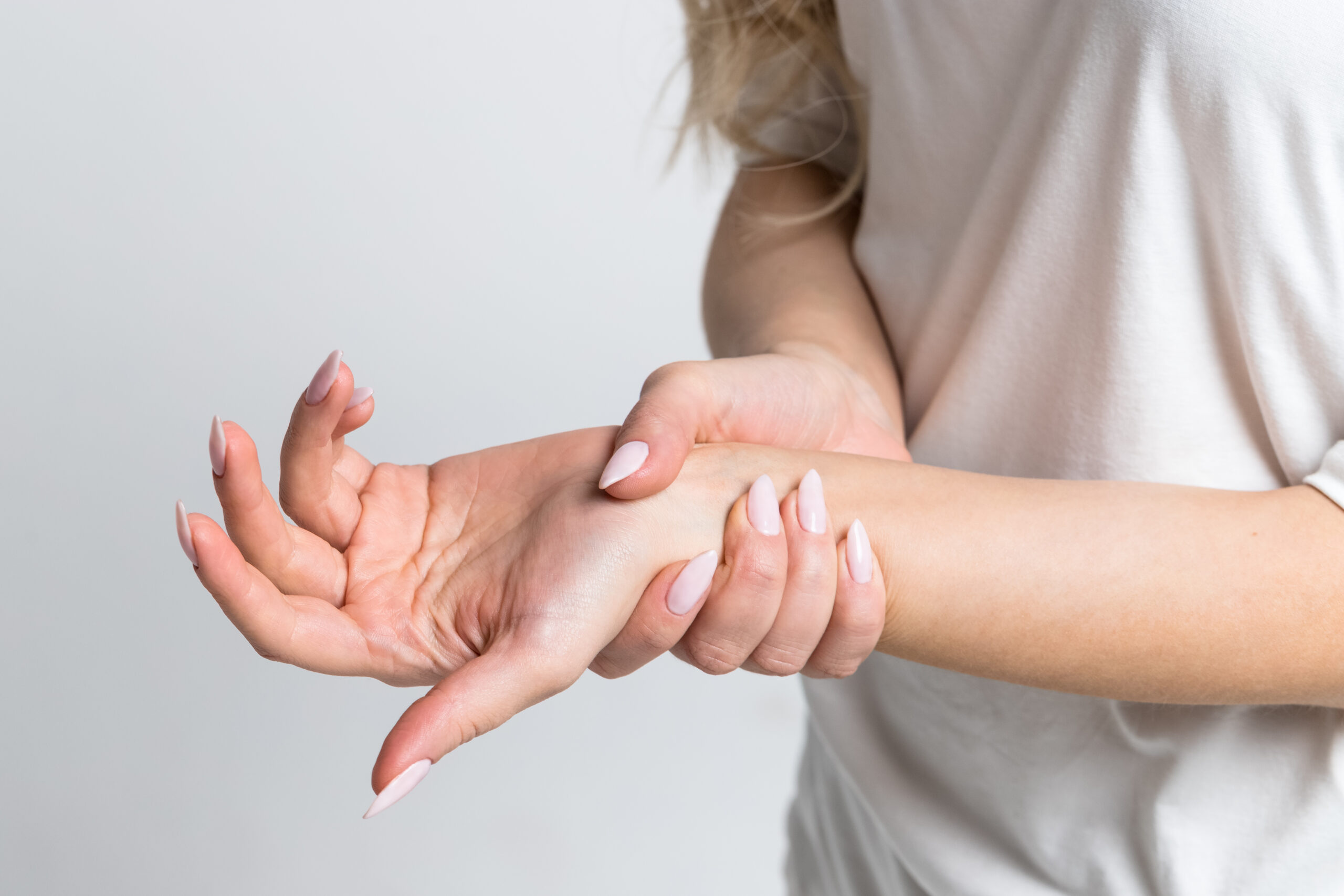


De Quervain’s Tenosynovitis, also known as De Quervain’s Tendinitis or De Quervain’s Syndrome, is a painful condition affecting the tendons at the base of the thumb. Inflammation and swelling in this area cause discomfort that can radiate into the wrist, limiting movement and making everyday activities challenging. This condition is commonly triggered by repetitive motions or overuse of the thumb and wrist.


Risk Factors
- Age: People over 30 are at a higher risk of developing the condition.
- Sex: This condition is more common in women. Pregnancy and hormonal changes can also increase the risk.
- Repetitive hand & wrist motions: Certain activities that involve repetitive motions of the hands and thumbs—such as gaming, golfing, racket sports, playing musical instruments, manual labor, and childcare—can increase your risk.
- Poor posture: Poor posture during repetitive hand movements can strain the tendons in the wrist, increasing the risk of developing this condition.
Symptoms
Below are some of the most common symptoms associated with De Quervain’s Tenosynovitis. Patients often experience more than one symptom.
- Pain and tenderness along the wrist and thumb
- A snapping or catching sensation when moving the thumb
- Pain that worsens with activity
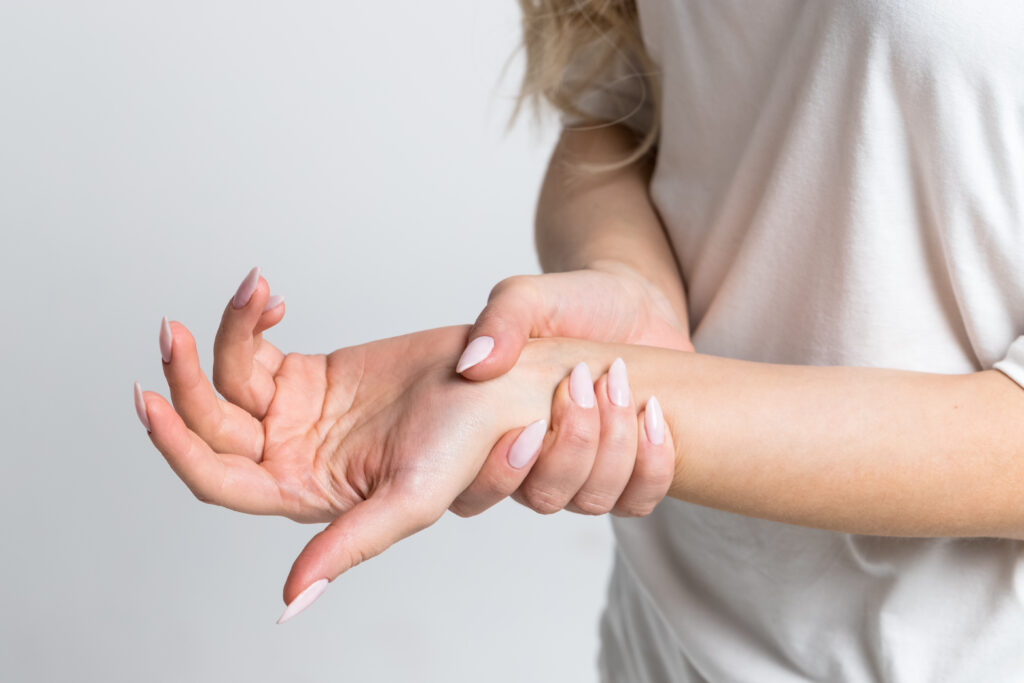
- Swelling on the thumb side of the wrist
- A fluid-filled cyst may be present with the swelling
- Difficulty grasping objects between the thumb and fingers
Diagnosis
Imaging tests are usually unnecessary to diagnose this condition. Your provider will perform a physical examination, applying pressure to the thumb side of your wrist to check for pain. You may also be asked to perform a Finkelstein test: this involves bending your thumb across the palm of your hand, folding your fingers down over your thumb, and then bending your wrist towards your little finger. If this movement causes pain on the thumb side of your wrist, it may indicate De Quervain’s Tenosynovitis.
Treatment Options
Pain and inflammation can often be managed without surgery. Physicians typically begin with non-surgical treatment options before considering surgical intervention.
Non-Surgical Treatments
- Bracing or splinting: Immobilizes the wrist and thumb to relieve pressure on the thumb tendons.
- Icing: Applying ice to the wrist for about 10 minutes several times a day can help reduce swelling and relieve pain.
- Rest: Minimizing the use of the affected wrist—especially repetitive motions and lifting—can support recovery.
- NSAIDs: Over-the-counter nonsteroidal anti-inflammatory drugs (NSAIDs), such as ibuprofen, can help reduce inflammation and alleviate pain.
- Corticosteroids: These prescription anti-inflammatory injections are administered directly into the tendon covering to reduce swelling.
- Exercises: Stretching and strengthening exercises can be done under the supervision of a hand therapist. Physical or occupational therapists can guide you through exercises that help reduce pain and strengthen muscles while also providing additional tips to reduce strain on your wrists.
When Surgery Becomes Necessary
If non-surgical treatments do not provide sufficient relief, surgical intervention may be recommended, particularly if the pain becomes severe and interferes with daily activities. The surgical procedure, known as a “release” procedure, involves a small incision on the side of the wrist near the base of the thumb. This allows the surgeon to relieve pressure and friction on the swollen tendons, enabling the tendons to move freely without pain. De Quervain’s Tenosynovitis surgery is typically an outpatient procedure.