


By Fox Valley Orthopedics
Athletes face an inherent risk of injury, and such overuse injuries as stress fractures are common. Athletes who increase the intensity of their workouts too quickly, play their sport year-round without giving themselves adequate rest or recovery time, don’t cross-train, or lack proper athletic technique are more at risk of injury.
Even though many athletes firmly adhere to the adage “no pain, no gain,” it’s unadvisable to “power through” and play with a stress fracture. In fact, doing so could lead to an even more severe injury that takes longer to recover from. Although it’s undeniably a disappointment for an active person to hear they need to let their body heal before getting back in the game, it’s the best way to ensure they don’t become reinjured.
What Is a Stress Fracture?
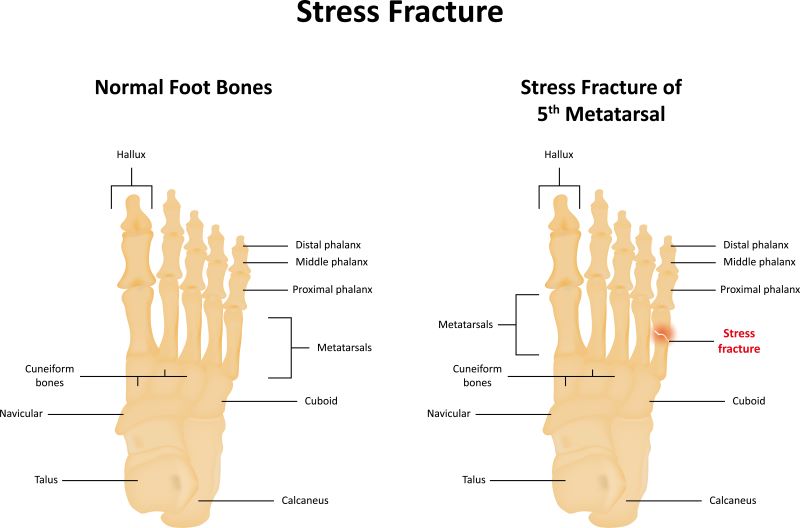
A fracture is another term for a broken bone, but a stress fracture is different from other types of fractures in that it typically doesn’t happen in a single traumatic incident like a fall or collision. Rather, a stress fracture occurs over time from overuse, and they typically occur in a foot, where one-fourth of all bones of the human skeleton are found. However, stress fractures can occur in any bone, including the ankles, the tibia of the lower leg, the femoral neck of the hip joint, or even the upper extremities for athletes who do lots of overhead movements. Stress fractures are most often found in bones from the middle of the foot to the toes, though. A stress fracture is characterized by tiny cracks in the surface of the bone, and although small, it typically takes about 8 weeks for the bone injured in a stress fracture to mend and heal completely.
Stress Fracture Diagnosis & Treatment
A sports medicine physician will meet with their patient to discuss any recent changes in the type, intensity, duration, or frequency of their physical activity leading up to when the pain of the stress fracture started. X-ray images will be ordered to look for any evidence of a healing fracture. If the doctor cannot visualize a stress fracture on an X-ray but still suspects one is present, an MRI or CT can be necessary to evaluate the painful area further.
Treatment for a stress fracture involves immobilizing the broken bone with a cast or walking boot either with or without crutches. This period may last up to 6 weeks before the athlete is allowed to slowly return to their sport. When preparing to start athletics again, the athlete should take the necessary steps to prevent future stress fractures by taking steps like monitoring their training schedule to make sure they aren’t overexerting themselves. Likewise, they should gradually increase the intensity of their workout by no more than 10 to 15% per week while getting back into shape.
Fox Valley Orthopedics (FVO) provides musculoskeletal care in diagnostic and comprehensive treatment for patients of all ages who have acute or chronic orthopedic conditions or injuries. FVO board certified/board eligible physicians and surgeons are specialized in various areas of orthopedics and draw from multiple treatment options to provide both surgical and non-surgical solutions. Areas of service include foot and ankle, hand and upper extremity, joint replacement, spine, and sports medicine, as well as pain management and rheumatology. FVO’s Ambulatory Surgery Center and in-house imaging also provide cost-effective convenient care, as well as does OrthoFirst, FVO’s urgent walk-in clinic. Fox Valley Orthopedics is a state-of-the-art, state-licensed facility, and is accredited by the AAAHC – Accreditation Association for Ambulatory Health Care. Visit FVOrtho.com, or call 630-584-1400 for more information.